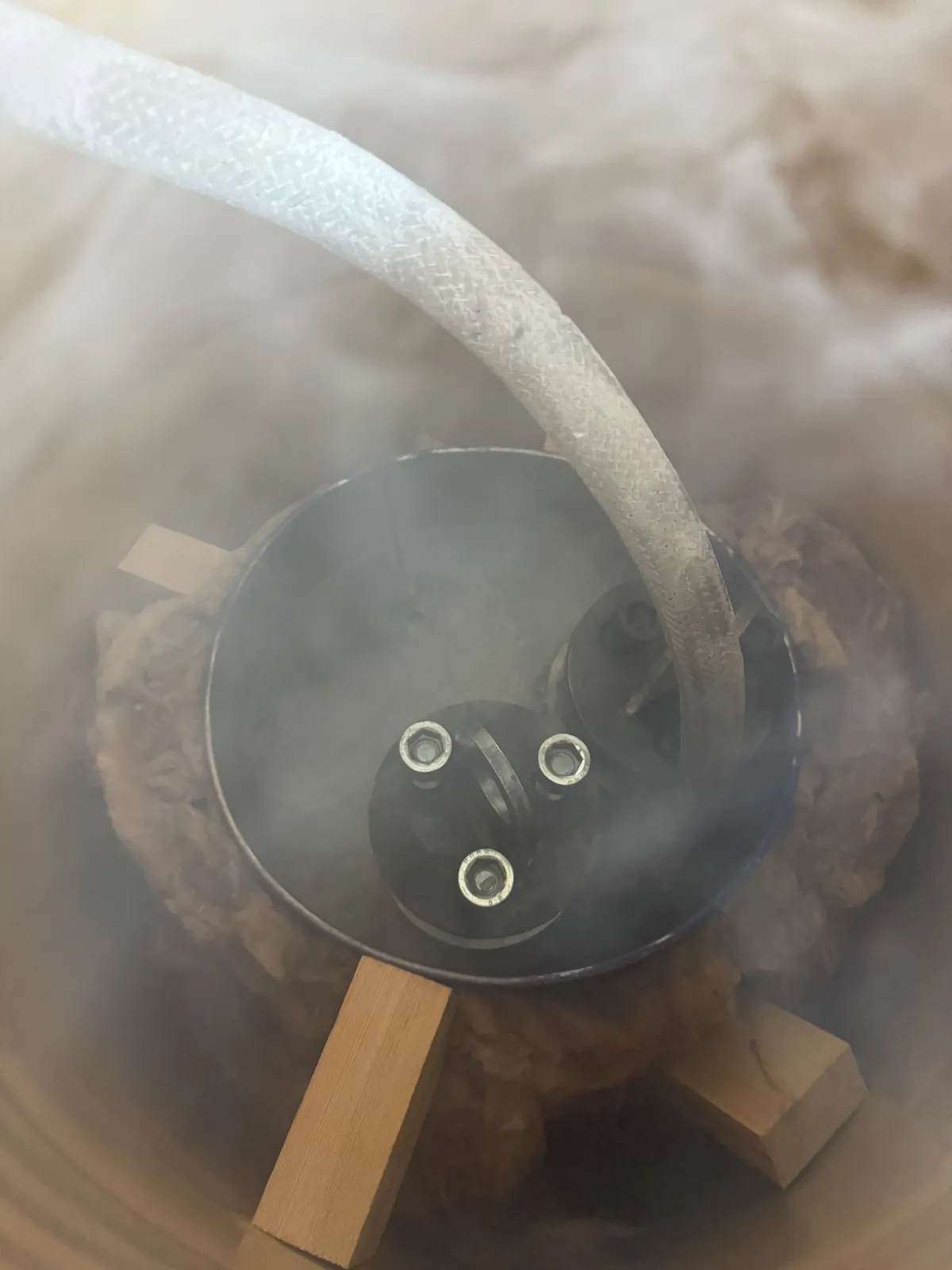
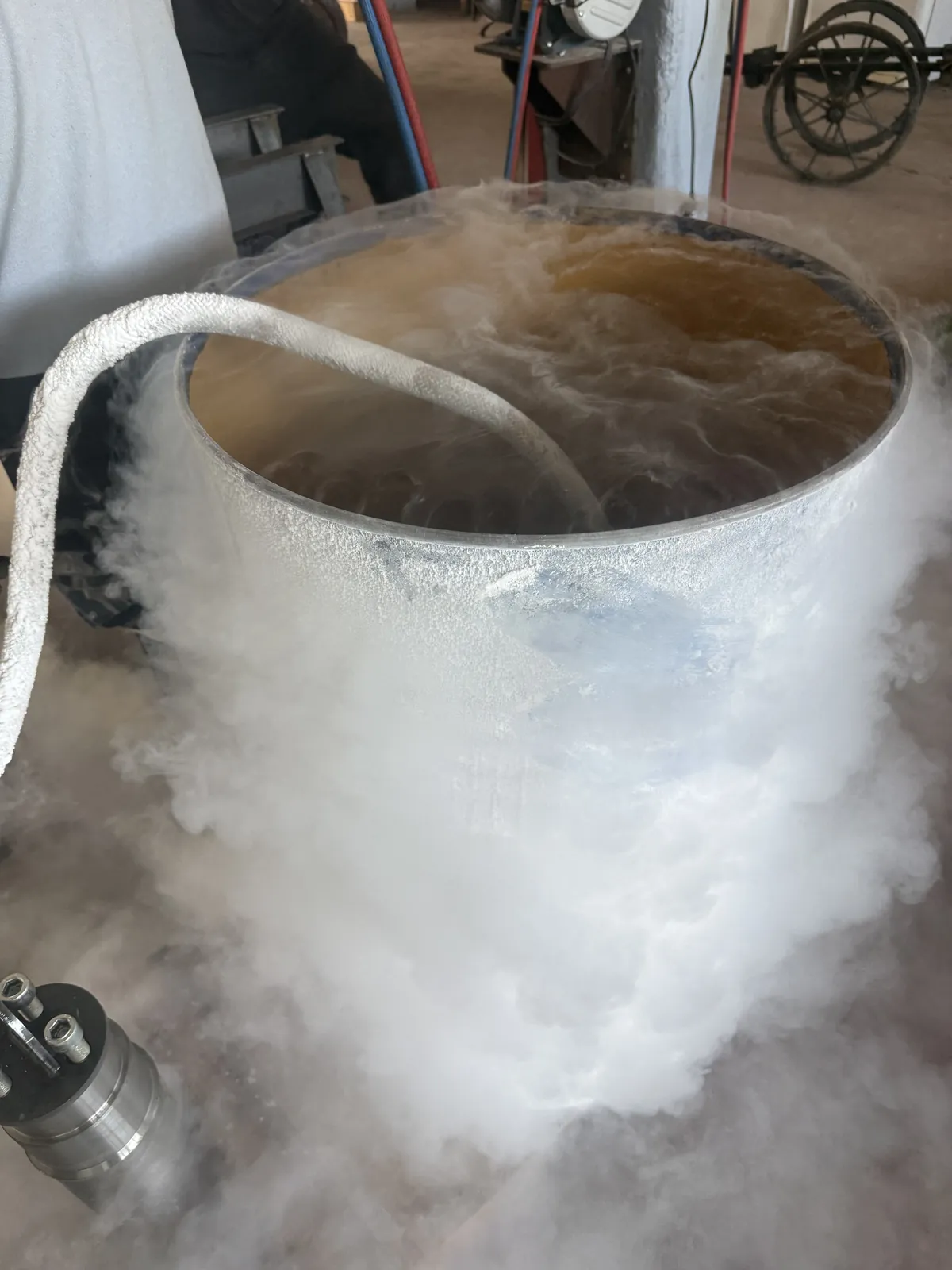
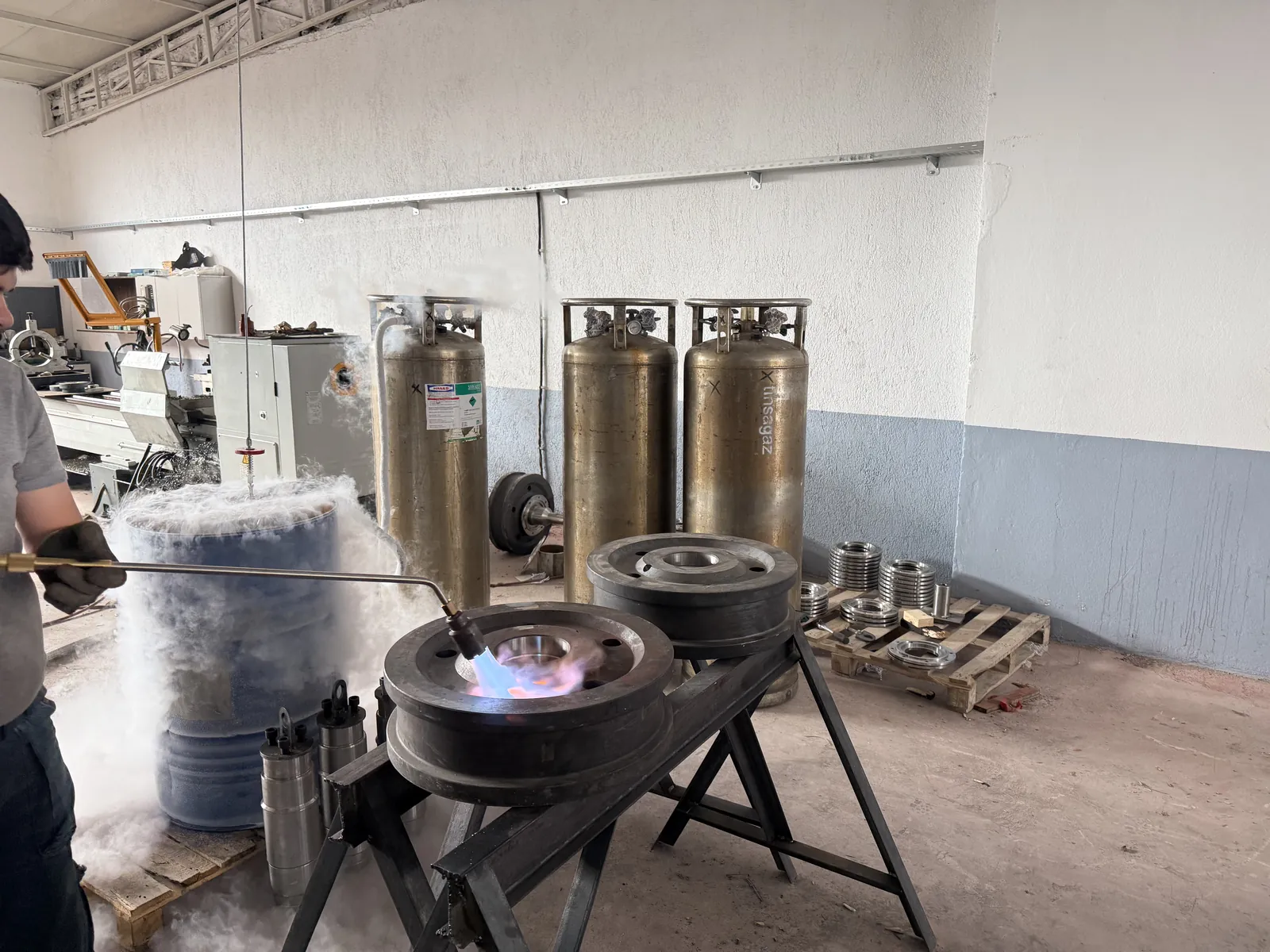
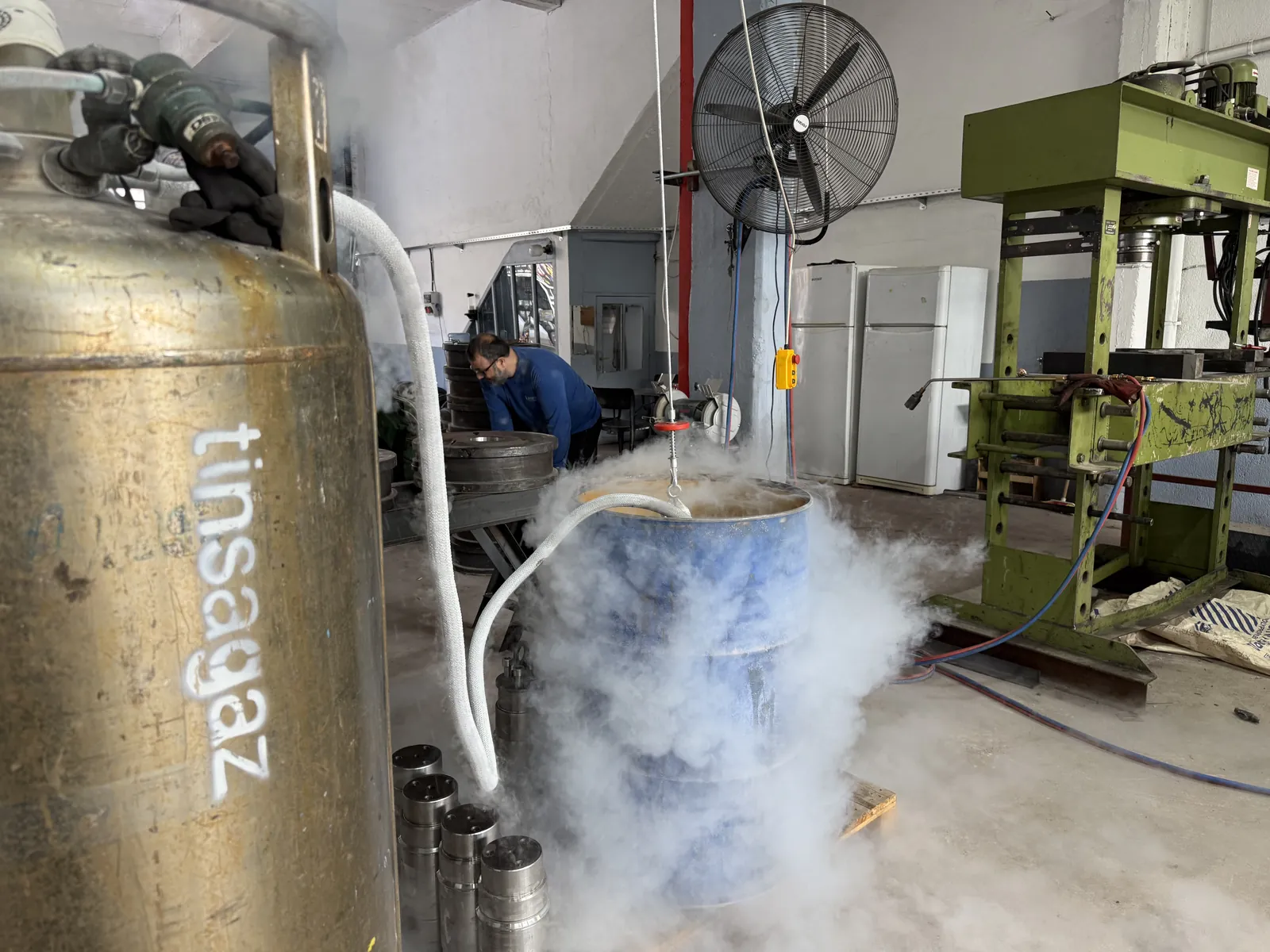
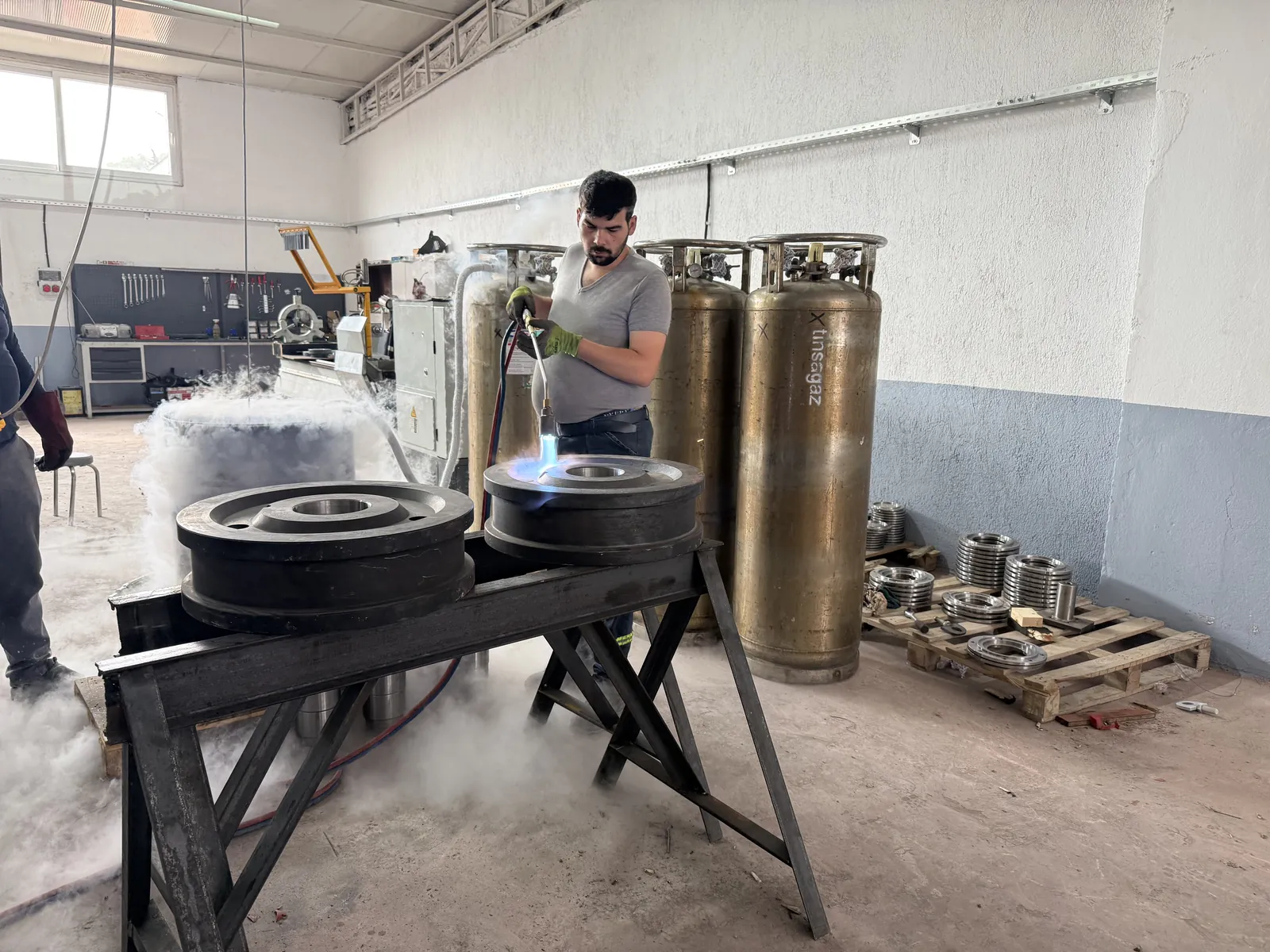
We support interference-fit assembly by cooling components in a controlled manner with liquid nitrogen or dry ice.
Service Overview
Shrink fitting is an assembly method that uses the controlled contraction of metal components at low temperatures. Liquid nitrogen or dry ice is used to reduce the component temperature and create the temporary dimensional change required for assembly.
The method can be used for the installation of bearings, bushings, shafts, gears and similar mechanical components requiring an interference fit. Before application, the component material, tolerances, dimensions and assembly conditions must be technically evaluated.
Tinsagaz provides services for preparing the cooling medium and carrying out shrink-fit applications under controlled site conditions. The application method is determined according to the characteristics of the component and the assembly requirements.
Images from Our Work
Key Features
✓Liquid nitrogen or dry ice application
✓Controlled component cooling
✓Interference-fit assembly support
✓Component and tolerance-based planning
Application Areas
Bearing installation
Bushing installation
Shaft applications
Gear installation
Machinery maintenance work
Industrial mechanical assembly
Service Process
1. Technical Assessment
Component dimensions, material properties, tolerances and the required assembly method are reviewed.
2. Application Planning
The required cooling and assembly method using liquid nitrogen or dry ice is determined.
3. Cooling and Assembly
The component is cooled under controlled conditions to achieve dimensional contraction, after which the interference-fit assembly is performed.
4. Final Inspection
Once the component temperature has stabilized, its position and mechanical fit are checked.
Occupational Safety
Liquid nitrogen and dry ice are used at very low temperatures and direct contact may cause serious cold burns. Appropriate personal protective equipment, ventilation and a working method suitable for the material properties of the component must be used.